In Jehova’s map each road is signed
You should study it well,
Otherwise t'is the Devil's Den you'll find,
On the roads to Hell.
There are many roads to many places,
In Jehova's map you'll find,
Many familiar faces,
Upon Satan's roads unlined.
Avoid the road to Purgatory,
Via Avarice and Greed,
Through to Bigotry
A road you should heed.
Beyond lies Lust,
Through the Valley of Sin,
Home of the unjust,
Don't go in.
Better you take the highway,
That leads through the Valley Of Peace,
Than the low way,
To the gambling dens of Fleece.
Follow the signs to Happiness,
And the City of Love,
Not the road to Emptiness,
Choose the road above.
I have travelled to Satan’s cave,
But found no meaning there,
No feeling I should save,
That I would want to share,
To touch my heart and mind,
Or answer heartfelt prayer.
Be not fooled by the Devil’s kind.
Stay away from Satan’s lair.
Avoid the motorways to Hate,
And the Fields of Destruction.
Take the road to Pearly Gate,
Where Hope is under construction.
Remember if you happen to stray,
By Satan’s roads you are not bound.
You can always turn and walk away,
And Evil walk around.
Pass the junction to Temptation,
For no sake but your own.
Choose carefully your destination,
On Jehova’s map all shown.
Make the wrong connection,
And you’ll miss the Pearly Gates,
That lead to Resurrection,
And who knows what other fates.
Postscript:
There are many destinies mapped out in the universal plan. We travel on many paths to our eventual destiny. The first path we travel is that which our parents are already on when we are born and on which we remain until such time as we are mentally and physically able to make independent choices. The many paths of destiny that have been laid out for us, crisscross each other like cross roads on a gigantic map. Each time we reach one of these crossroads, we have choices to make which influence the eventual outcome of our journey. At each crossroads, the path we are travelling is affected by the positive or negative flow of those we traverse which has a correspondingly negative or positive impact on our own destiny. At any such point we are vulnerable to the traffic flow. Sometimes our journey may tragically be shortened there and then by events out of our control. If we make the right choices and the dice rolls for us , we may continue our journey either in the same direction or choose another. This is what people call fate but it is in all probability part of the great plan, the learning curve towards enlightenment. Thus our control over our own destiny is at the very least tenuous.
Logically our individual destinies cannot be anything but inextricably linked to the collective journey upon which humankind is embarked Politicians in Israel and Palestine and all over the world where nations and cultures are in conflict, would do well to remember that the destiny of nations as well as individuals are therefore totally interdependent. No man or nation is an island. Individual well being is never assured if collective well being is suppressed denied or even simply ignored. This realisation is the only hope we have of building a world where we do not live in constant fear and threat from each other. We must build bridges not destroy them.
Thursday, September 30, 2004


Tuesday, September 21, 2004
Time for Iraq to stand up and be counted
Has the time come for the Iraqi people to stand up and be counted? They cannot go on blaming the coalition for the massacre of their own citizens by other Iraqi and Arab groups. The coalition has freed them from the brutal regime of Saddam Hussein. In so doing it has presented the Iraqi people with a once in lifetime opportunity to put their suffering behind them and to have a say in the way their country is governed. They now have a chance to prosper in peace, if they want it and they will never have a better one; thanks to the sacrifice, not of their fellow Arab nations but that of the western coalition.
Iraqis must now ask themselves, why should American, British, Polish, Italian, Japanese and others continue to risk their lives for people who do nothing to help themselves and show nothing but hostility, to those who fight to bring them freedom and democracy? It is time the Iraqis and the Arab nations as a whole, took a hard look at themselves and the responsibility they bear, for having stood aside while Saddam Hussein murdered and tortured his own people. Had their fellow neighbors, shown any sense of duty or care for their Iraqi brothers when Saddam Hussein was in power, the Americans would have had no cause or excuse to launch either Gulf War I or II and they would not now, be in Baghdad or anywhere else in Iraq.
We are where we are because neither the Arab nations nor the West have acted from a foundation based on civilised principle, i.e. doing what is right rather than what is expedient, over the last thirty years. The compromise of good practice and sound principles in international affairs has jeapordised the outcome of events. We must wake up and understand that one can never attain the right solution by applying the wrong equation, to any problem. The right outcome can never nor will ever be achieved by compromising on what we know to be right. Wrong can never be right. This is the lesson the international community must take on board in the execution of national and international politics.
It is time to admit that the United nations can never be an effective arbiter of civilisation or international law whilst it is founded on the ill conceived often corrupted principles that pervade its entire structure. A United Nations that harbours despotic and corrupt member governments within its walls can and never will be anything but partially corrupt. Such a body will never be able to act effectively to protect the innocent from state barbarity. We need not look further than the genocide in Rwanda, the chaos in Zimbabwe, the slaughter in Sudan and the persecution of the Iraqi people by Saddam Hussein for over thirty years, to know this to be true.
In the absence of an effective international body responsible for the application of civilised rules of international behavior, countries will inevitably fall back on unilateral action to resolve problems and the world will continue to flounder from catastrophe to catastrophe. Until we understand that the serving of the common interest is the key to self interest, we will go nowhere worth going to.
Now is the time for the Iraqi people to show the world a better way. Their destiny lies not in the hands of the UN or the USA but in their own hands, if they did but realise it. It is what they now do that will determine what course the UN and USA will follow, not the other way around. Say yes to freedom. Say yes to democracy. Say yes to justice and above all say no to terror and the USA will become their client and not their master, their friend and not their enemy.
Refuse and we must bid them goodbye and leave them to their fate, which may be far worse than the suffering inflicted on them by Saddam Hussein. It is up to the Iraqi people. They must understand that we cannot nor will not go on dying for nothing.
Iraqis must now ask themselves, why should American, British, Polish, Italian, Japanese and others continue to risk their lives for people who do nothing to help themselves and show nothing but hostility, to those who fight to bring them freedom and democracy? It is time the Iraqis and the Arab nations as a whole, took a hard look at themselves and the responsibility they bear, for having stood aside while Saddam Hussein murdered and tortured his own people. Had their fellow neighbors, shown any sense of duty or care for their Iraqi brothers when Saddam Hussein was in power, the Americans would have had no cause or excuse to launch either Gulf War I or II and they would not now, be in Baghdad or anywhere else in Iraq.
We are where we are because neither the Arab nations nor the West have acted from a foundation based on civilised principle, i.e. doing what is right rather than what is expedient, over the last thirty years. The compromise of good practice and sound principles in international affairs has jeapordised the outcome of events. We must wake up and understand that one can never attain the right solution by applying the wrong equation, to any problem. The right outcome can never nor will ever be achieved by compromising on what we know to be right. Wrong can never be right. This is the lesson the international community must take on board in the execution of national and international politics.
It is time to admit that the United nations can never be an effective arbiter of civilisation or international law whilst it is founded on the ill conceived often corrupted principles that pervade its entire structure. A United Nations that harbours despotic and corrupt member governments within its walls can and never will be anything but partially corrupt. Such a body will never be able to act effectively to protect the innocent from state barbarity. We need not look further than the genocide in Rwanda, the chaos in Zimbabwe, the slaughter in Sudan and the persecution of the Iraqi people by Saddam Hussein for over thirty years, to know this to be true.
In the absence of an effective international body responsible for the application of civilised rules of international behavior, countries will inevitably fall back on unilateral action to resolve problems and the world will continue to flounder from catastrophe to catastrophe. Until we understand that the serving of the common interest is the key to self interest, we will go nowhere worth going to.
Now is the time for the Iraqi people to show the world a better way. Their destiny lies not in the hands of the UN or the USA but in their own hands, if they did but realise it. It is what they now do that will determine what course the UN and USA will follow, not the other way around. Say yes to freedom. Say yes to democracy. Say yes to justice and above all say no to terror and the USA will become their client and not their master, their friend and not their enemy.
Refuse and we must bid them goodbye and leave them to their fate, which may be far worse than the suffering inflicted on them by Saddam Hussein. It is up to the Iraqi people. They must understand that we cannot nor will not go on dying for nothing.
Tuesday, September 14, 2004
Mr. Putin at the crossroads of destiny
So Mr. Putin has decided to use the recent despicable events at Beslan to reinforce his hold on power by appointing regional governors himself, thus denying the people the opportunity to vote for their own representatives; thereby tightening his influence and grip on power. This is the oldest trick in the book, used by despots the world over since the beginning of time. Russia is fast returning to the dark ages of autocratic rule, her fragile democracy dissipating like water from a steaming kettle.
This is not the solution to Russia's problems, nor will it make Russia safer from acts of terrorism. One does not make Russia or any other country better, safer or stronger by diluting democracy. The stifling of democracy can only inhibit the production of ideas and the elements of competition essential to efficiency and innovation. Autocracy asphyxiate initiative. It turns people into automatons and inhibits expression and invention. These fundamental elements of freedom are what have made the United States and Western Europe so successful and so vibrant.
The centralization of power cannot protect Russia from terrorism but better public awareness, good intelligence, shared intelligence and well trained efficient security services can help reduce the risks.
Likewise, centralization cannot eliminate corruption. If anything it may increase it or at least provide greater opportunity for those higher up the ladder of power, once ensconced, to indulge themselves and in so doing spread the corruption outwards as well as downwards to a much greater degree even, than is the case now. The corrupt always depend upon the corruptible.
The only way to reduce corruption is to make those at all levels of power more accountable to the people they represent and this can only be done where democracy and a free press prevails. In young democracies there are always those willing and able to take advantage of a situation to manipulate the people to their own ends but the people learn quickly who they can trust and who is and is not corrupt. It is they, not the state who will root out the corrupt and make the leadership accountable. As a well known British politician once said, "you can fool all of the people some of the time but you cannot fool all of the people all of the time". What is needed is a strengthening of the foundations of democracy. Weakening these foundations will only weaken Russia in the longer term.
I say this to Mr. Putin. You stand at the crossroads of your own as well as Russia's destiny. You have the opportunity and the choice to serve your country well or badly. You can go down in history as either one of the greatest leaders Russia has ever known or you can be remembered as just another self serving despot, in a long line of self serving despots. That choice and that responsibility lies in your own hands Mr. Putin and I hope, we all hope, you choose wisely.
Is it better to build bridges or destroy them? Is compassion, understanding and collaboration better than vengeance, ignorance and confrontation? Which of these building blocks will build the better world? The answer is surely obvious.
This is not the solution to Russia's problems, nor will it make Russia safer from acts of terrorism. One does not make Russia or any other country better, safer or stronger by diluting democracy. The stifling of democracy can only inhibit the production of ideas and the elements of competition essential to efficiency and innovation. Autocracy asphyxiate initiative. It turns people into automatons and inhibits expression and invention. These fundamental elements of freedom are what have made the United States and Western Europe so successful and so vibrant.
The centralization of power cannot protect Russia from terrorism but better public awareness, good intelligence, shared intelligence and well trained efficient security services can help reduce the risks.
Likewise, centralization cannot eliminate corruption. If anything it may increase it or at least provide greater opportunity for those higher up the ladder of power, once ensconced, to indulge themselves and in so doing spread the corruption outwards as well as downwards to a much greater degree even, than is the case now. The corrupt always depend upon the corruptible.
The only way to reduce corruption is to make those at all levels of power more accountable to the people they represent and this can only be done where democracy and a free press prevails. In young democracies there are always those willing and able to take advantage of a situation to manipulate the people to their own ends but the people learn quickly who they can trust and who is and is not corrupt. It is they, not the state who will root out the corrupt and make the leadership accountable. As a well known British politician once said, "you can fool all of the people some of the time but you cannot fool all of the people all of the time". What is needed is a strengthening of the foundations of democracy. Weakening these foundations will only weaken Russia in the longer term.
I say this to Mr. Putin. You stand at the crossroads of your own as well as Russia's destiny. You have the opportunity and the choice to serve your country well or badly. You can go down in history as either one of the greatest leaders Russia has ever known or you can be remembered as just another self serving despot, in a long line of self serving despots. That choice and that responsibility lies in your own hands Mr. Putin and I hope, we all hope, you choose wisely.
Is it better to build bridges or destroy them? Is compassion, understanding and collaboration better than vengeance, ignorance and confrontation? Which of these building blocks will build the better world? The answer is surely obvious.
Wednesday, July 28, 2004
Whose will?
It was not my will to be born, to live or to die. So whose will is it? Since my will is subservient to the forces of creation, I am the will of another. Do with me therefore what you will for I am powerless to resist the death I do not will. I can only embrace the life and death I am given and wonder what will follow next.
Tuesday, July 13, 2004
Free Trade - Rubbish!
Is it just me who thinks that the EU is a protectionist trading block? Is it just me that thinks that imposing a 30% tariff on value added cocoa is anti-free trade?
The last time I looked up the word "free", it meant "without cost". Apparently this is wrong. Free does not mean that at all. Apparently free means as long as you export your raw materials to us at rock bottom prices we will buy them from you free of any import tariffs. Free, you understand means free to us, not you. Free means, we the importers, get to add the value and post the ensuing profit to our balance sheets, not yours!
So just remember you producers, when the EU and others talk about free trade and globalisation, they mean they want your trade free, globally. As long as this is clearly understood we'll all get on like a house on fire at the next round of World Trade Organistion talks.
So, please raise your glasses to free trade and globalistion and keep that cocoa coming boys.
The last time I looked up the word "free", it meant "without cost". Apparently this is wrong. Free does not mean that at all. Apparently free means as long as you export your raw materials to us at rock bottom prices we will buy them from you free of any import tariffs. Free, you understand means free to us, not you. Free means, we the importers, get to add the value and post the ensuing profit to our balance sheets, not yours!
So just remember you producers, when the EU and others talk about free trade and globalisation, they mean they want your trade free, globally. As long as this is clearly understood we'll all get on like a house on fire at the next round of World Trade Organistion talks.
So, please raise your glasses to free trade and globalistion and keep that cocoa coming boys.
Tuesday, June 15, 2004
Back to Africa
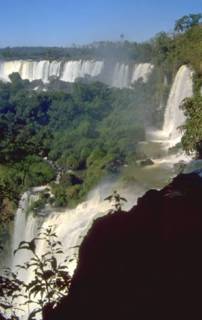
Victoria Falls

The rain battered the tin roof like a demented drummer, endlessly stuck on the same rhythm, constant and deafening but somehow hypnotic. The tropical storm bought relief from the heat and dust of the last few days. Joel lay in bed feeling secure, protected from the elements, like a baby in it’s mother’s womb. A massive drum roll of thunder played overhead, followed by a bright flash of lightening that lit up the night sky. It was as though God had briefly lit some monumental torch to better see his way through the driving rain. Joel sighed and drifted off into unconcerned sleep.
Balthazar woke him at 7 o’clock with a cup of tea as he did every day. That early morning cuppa, somehow made all the difference, providing the necessary fuel to kick start his metabolism. He rose and walked nude into the bathroom. He hated pyjamas. Wearing pyjamas in bed was like wearing a three piece suit to the office, stifling and unnecessary. Thank God, he no longer had to do that. Hell, he thought, bed was the only place where one could feel truly free anymore. Working in Africa had it’s advantages and no pyjamas or suits was one of them. Yes he was back, back where he belonged, away from the spin and bullshit of London, Paris or New York. God it felt good!
Showered and refreshed, he walked out onto the balcony and looked out over the rooftops and streets of the town and on across the lake to the hills on the other side. It was a sight he never tired of. Anywhere else on Earth, he thought to himself, one would have to be a millionaire to enjoy a view like this. He sat down at the table and dug heartily into papaya, eggs and bacon and the best arabaca coffee in the world. He sat back, lost in his thoughts and lit a cigarette which he inhaled contentedly between sips of coffee.
Bujumbura, like Africa itself was a tapestry of paradoxes, a simple pretentious ugly and yet attractive place. There were no skyscrapers here, just the two storied, largely white painted, flat roofed buildings typical of many towns and cities in Africa, Asia or South America. There weren’t even any traffic lights except the one unblinking set in the Avenue de la Paix, testament to a brief but disastrous flirtation with sophistry. The uneven pavements that lead one down the main streets, give way intermittently to hollows and humps of compressed red earth constantly re-sculptured by the endless stamp of feet, the stinging chisel of tropical rain and the dehydrating heat of the equatorial sun. The whole place was in a constant state of repair and disrepair.
Embedded in the surrounding hills overlooking Lake Tanganyika and the Ruzizi Plain were the elegant and spacious houses rented by diplomats, NGO’s, technical assistants and successful entrepreneurs. Reflecting in the sunlight out to the north east were the tin roofs of the poorer shanty dwellers. Scattered everywhere was the fertile green canopy of date palms, avocado, mango, papaya and banana trees, whose fruits swelled the market stalls in the town centre and the breakfast tables of rich and poor alike.
The ample gardens of the well to do expatriates were awash with the colour of hibiscus and bougainvillea plants, the scent of moon flowers and yesterday, today and tomorrow shrubs. Down below the network of tarmac roads in and around the town centre, gave way to rutted gravel tracks that headed into the dusty Asian and African quarters, where even weeds struggled to get a grip in the hard trampled, barren earth. Yes, Bujumbura had the alluring scent and charm of Africa writ large in every pot holed boulevard and paint flaking wall of it‘s being.
Thanks to the rain, the hills on the opposite shoreline, were clearly visible. They appeared to rise almost vertically out of the lake. At their base lay the town of Uvira, a sprawling African township with it’s mix of slum dwellings, traders shops, pot holed roads and the inevitable army barracks. Getting there though was another matter. Crossing the border inevitably meant paying the officials an unofficial tariff, regardless of whether or not, your papers were in order. The immigration and customs officers could always invent a “new regulation” as and when it suited them. The favourite, when all else had failed to extract the required bribe, was the non existant but apparently “mandatory AIDS certificate”. Unpleasant though it was, it was inevitable given the fact that government officials were seldom paid and were left to use their initiative to “earn” their living. As a result they created their own rules and tariffs with impunity and it must be said, with some imagination. If only their noteworthy initiative could have been put to better use. This was one aspect of Africa that Joel found hard to stomach and Zaire was perhaps the most anarchic country in Africa in this respect, although he had heard some pretty horrifying stories about Nigeria and Liberia too.
On one occasion he had met a well travelled advertising representative from a national U.K. newspaper at the Novotel in the centre of town. The poor devil had spent ten years travelling the length and breadth of the continent in fourth rate airlines and fifth rate taxis. On one occasion he was on an Air Zaire flight out of Kinshasa. The plane was hurtling down the runway when the pilot decided to abort the take-off and slammed on the breaks. Amidst guffaws of laughter he recalled how his head had been thrown forward with such force that he had bitten through the cover into the foam of the seat in front of him. As he was catapulted back into his seat a large chunk of foam and material remained firmly entrapped between his tightly clenched teeth.
Being Africa and more particularly, Zaire, the pilot called for the steps to be brought to the end of the runway, climbed down to the tarmac and ran a quick check round the aircraft. He then climbed back on board, retook his seat and headed immediately back down the runway to recommence take-off. On hearing this not entirely surprising yarn, Joel had laughed, saying that had it been him, he’d have been down the steps before the pilot and continued his journey on foot!
His drinking companion then went on to recount an experience he had endured in Liberia. He was on a business trip and had been out to dinner. On his way back to the hotel he had passed the usual ladies of the night displaying their charms. Weary from his travails he ignored their lascivious suggestions and walked on by. Suddenly he felt cold steel on the back of his neck. Turning around, he noted with unease that it was a pistol firmly attached to the hand of a Liberian soldier. Hissing into his ear the soldier asked him why he had not taken one of the women? Heart beating with surprise and some panic, he replied falteringly that he was very tired and just wanted to go back to his hotel and sleep. Not satisfied, the soldier demanded he pay a fine of one hundred dollars! Somewhat shell-shocked, he asked the soldier why? Pressing the pistol harder into his neck he replied, “insulting Liberian womanhood”!
My companion said he had never handed over a hundred dollar bill with more alacrity in his life. Joel remembered suggesting, it might have been cheaper to avail himself of the lady in question. His companion thought not calculating that it would in all probability have cost him considerably more in doctors fees! It was a fair point.
It had been a harrowing as well as thirst provoking adventure and he had hurried back to his hotel and drowned a double scotch or three on the rocks before falling exhausted into bed. Looking at him it was evident that he had had need of a few tranquilising whiskies in his travels. In truth, the poor fellow was a nervous shaking wreck, but good company, for all that. Ah, the charms of Africa!
Joel made a mental note there and then to cross Liberia off his places to see list. There were others too that were less than enticing. The American marines had found Somalia too hostile for there liking in recent times. Angola was another country that had been at war for a decade or more. Sierra Leone was somewhat less than inviting and some of the stories Joel had heard about Nigeria did nothing to entice him to visit Lagos. Though Zaire’s border was a mere 20 kilometres or so from Bujumbura, that was close enough for Joel.
He had visited Lumbumbashi in the early eighties in the Presidential Caravel with some Round Table friends and keen golfers. It was a thoroughly enjoyable week-end but there lies another story. Natural diplomat though he was, he was not good at being humble when confronted by drunken, greedy, obdurate border “officials”, no matter how alluring the country on the other side. Strangely though it was all part of Africa's allure.
Burundi was another kettle of fish though and there were plenty of exotic and rare varieties in Lake Tanganyika. It had its problems but at the time they seemed miniscule compared to many. It was a beautiful country of endless rolling patchwork covered hills, planted with maize, sorgem, beans, potatoes, the inevitable bananas and other food crops. Eucalyptus trees were planted widely, particularly on the hill summits and along the road sides. Being one of the most densely populated countries in Africa much of the indigenous vegetation had long since disappeared. There were however, still some glorious enclaves of natural forest scattered around the country. The glittering jewel in the crown was Lake Tanganyika, a blue amethyst, sitting in the basin of the Ruzizi Plain, an extension of the magnificent Rift Valley. The lake is the second deepest in the world and stretches southwards 800 kilometres to the south, into Zambia. To be on the lake at the setting of the sun, is to be overwhelmed by it’s surrounding beauty and the almost mystical power of Africa. The spirit once captured, never escapes. Once parted the yearning to return never leaves one. Yes, Joel thought, it was good, really good to be back.
Thursday, June 10, 2004
Shades
We are many shades of many colours,
The seconds and minutes in the hours,
The winding valleys, beneath the mountains,
The crystal water of spouting fountains,
The scented petals of colourful flowers,
The winter drizzle in fresh spring showers.
We are the breath of the northerly winds,
The tropical heat on sun burned skins,.
The grains of sand upon the beaches,
The mellow flavour, of yellow peaches.
We are the darkness in the moonless nights,
The flash of lightening, a spark ignites.
We are the words that tell a story,
Of history past and deeds of glory,
We are the thoughts our voices speak,
The ghostly shadows, of times antique.
We are father, mother and ancestor feint,
Brush strokes of creation, on a canvas of paint.
We are the yellow and green in shades of blue,
Of colours many, from colours few.
We are the shades of grey in black and white,
We are the light of day and the dark of night.
We are the music of concerto and string,
The soprano and tenor, when we sing.
We are part devil, part god, you see,
One and the same, for eternity.
I am you and you are me,
In varying form and subtle degree.
I am the beginning and I am the end,
I am your enemy and I am your friend.
The seconds and minutes in the hours,
The winding valleys, beneath the mountains,
The crystal water of spouting fountains,
The scented petals of colourful flowers,
The winter drizzle in fresh spring showers.
We are the breath of the northerly winds,
The tropical heat on sun burned skins,.
The grains of sand upon the beaches,
The mellow flavour, of yellow peaches.
We are the darkness in the moonless nights,
The flash of lightening, a spark ignites.
We are the words that tell a story,
Of history past and deeds of glory,
We are the thoughts our voices speak,
The ghostly shadows, of times antique.
We are father, mother and ancestor feint,
Brush strokes of creation, on a canvas of paint.
We are the yellow and green in shades of blue,
Of colours many, from colours few.
We are the shades of grey in black and white,
We are the light of day and the dark of night.
We are the music of concerto and string,
The soprano and tenor, when we sing.
We are part devil, part god, you see,
One and the same, for eternity.
I am you and you are me,
In varying form and subtle degree.
I am the beginning and I am the end,
I am your enemy and I am your friend.
Tuesday, June 08, 2004
Apathy
Apathy has no voice. Apathy makes no noise. It passes unheard, unheeded and unheralded. Apathy is the enemy of democracy and the meat and drink of dictators. It feeds the greedy and the corrupt. It disempowers the people. It encourages arrogance and disregard in the powerful and those who ensconce themselves in ivory towers. Apathy is the succumbing of one's will to the bidding of others. Apathy is the surrender of control over destiny.
Osama - The Lesson of the Blackbird
Now here’s a story, I have to tell.
Pray excuse me,
If I do not tell it well.
It was a warm spring day,
Not long ago,
I happened to gaze, through a window,
And in the garden,
A murderous scene was set,
One I saw and shall not forget.
I saw a blackbird trapped upon the ground,
From his open, orange beak, came not a sound,
Over him talons upon his throat,
A Kestrel stood,
Wings spread like a hood
Hiding his dark deed,
From the neighbourhood.
Deadly claws held firm the prey,
Remorseless, almost sanguine,
Was he in his way.
His stranglehold tightened,
Upon the blackbird, frightened.
Its small feathered body,
Struggled and fought,
Though it seemed, all for nought.
With every sinew, it struggled and strived,
Fighting for life and the strength to survive.
It flittered and fluttered,
Gasping for air,
Afraid to die, in the kestrels lair,
Fighting for time,
For time was life,
Worth the pain and all the strife,
Till the blackbird,
Could fight no more,
And death upon him,
Closed the door.
Whilst feathered friends looked on alarmed,
The kestrel, feeling its prey becalmed,
Winged effortless into the cloudless sky,
One last time, the blackbird to fly.
Then Osama,
Your words came to me once more,
The words I have heard, many times before.
We prefer life but you prefer death,
You said.
But the blackbird was gone,
The blackbird was dead.
No longer do we hear his song.
Nor see him fly among the hedgerows,
Nor over fields, where the thistle and the nettle grows,
No longer does he scamper on my lawn,
Picking up breadcrumbs in the early morn.
Ah! death, I’ve seen it clear.
Is the end of life, God holds dear.
You see Osama, Nature’s laws are unbending,
The struggle for life, is unending.
It is not death the Blackbird seeks,
Though he live for years,
Or merely weeks.
It’s life, the Blackbird cherishes,
Not death by which he perishes.
Osama, if it is death you prefer,
Then why life do you suffer?
If death Osama, is so glorious,
Why is Allah’s work so laborious?
If it is in death we are living
Why is Allah, life giving?
If death is true light,
What need we of sight,
To see life’s glories,
Or ears,
To hear life’s stories?
And why Osama, would you flee,
The talons of the Kestrel,
Swooping down from the tree?
Without life Osama, there is no God,
And without God, there is no life
That’s why blackbird struggles and strives,
Why bees hum in their hives.
It is not for death, they suffer strife,
It is for time, for time is life.
And every time, has a season.
If blackbird lives, he lives for reason.
Blackbird is born of God’s creation,
Wondrous, beyond our imagination.
Our soul to God we give,
Not to die,
But to live and live.
In life we hear the blackbird’s song,
But in death, his music is forever gone.
The mournful silence of death, cannot be heard.
Unlike the song, of a singing blackbird.
So who, Osama, chooses to die?
Not the Blackbird, the kestrel or I,
If death is so glorious Osama,
Then please tell me why,
Why the great Allah, made you and I?
And why Osama, would you flee,
The talons of the Kestrel,
Swooping down from the tree?
Pray excuse me,
If I do not tell it well.
It was a warm spring day,
Not long ago,
I happened to gaze, through a window,
And in the garden,
A murderous scene was set,
One I saw and shall not forget.
I saw a blackbird trapped upon the ground,
From his open, orange beak, came not a sound,
Over him talons upon his throat,
A Kestrel stood,
Wings spread like a hood
Hiding his dark deed,
From the neighbourhood.
Deadly claws held firm the prey,
Remorseless, almost sanguine,
Was he in his way.
His stranglehold tightened,
Upon the blackbird, frightened.
Its small feathered body,
Struggled and fought,
Though it seemed, all for nought.
With every sinew, it struggled and strived,
Fighting for life and the strength to survive.
It flittered and fluttered,
Gasping for air,
Afraid to die, in the kestrels lair,
Fighting for time,
For time was life,
Worth the pain and all the strife,
Till the blackbird,
Could fight no more,
And death upon him,
Closed the door.
Whilst feathered friends looked on alarmed,
The kestrel, feeling its prey becalmed,
Winged effortless into the cloudless sky,
One last time, the blackbird to fly.
Then Osama,
Your words came to me once more,
The words I have heard, many times before.
We prefer life but you prefer death,
You said.
But the blackbird was gone,
The blackbird was dead.
No longer do we hear his song.
Nor see him fly among the hedgerows,
Nor over fields, where the thistle and the nettle grows,
No longer does he scamper on my lawn,
Picking up breadcrumbs in the early morn.
Ah! death, I’ve seen it clear.
Is the end of life, God holds dear.
You see Osama, Nature’s laws are unbending,
The struggle for life, is unending.
It is not death the Blackbird seeks,
Though he live for years,
Or merely weeks.
It’s life, the Blackbird cherishes,
Not death by which he perishes.
Osama, if it is death you prefer,
Then why life do you suffer?
If death Osama, is so glorious,
Why is Allah’s work so laborious?
If it is in death we are living
Why is Allah, life giving?
If death is true light,
What need we of sight,
To see life’s glories,
Or ears,
To hear life’s stories?
And why Osama, would you flee,
The talons of the Kestrel,
Swooping down from the tree?
Without life Osama, there is no God,
And without God, there is no life
That’s why blackbird struggles and strives,
Why bees hum in their hives.
It is not for death, they suffer strife,
It is for time, for time is life.
And every time, has a season.
If blackbird lives, he lives for reason.
Blackbird is born of God’s creation,
Wondrous, beyond our imagination.
Our soul to God we give,
Not to die,
But to live and live.
In life we hear the blackbird’s song,
But in death, his music is forever gone.
The mournful silence of death, cannot be heard.
Unlike the song, of a singing blackbird.
So who, Osama, chooses to die?
Not the Blackbird, the kestrel or I,
If death is so glorious Osama,
Then please tell me why,
Why the great Allah, made you and I?
And why Osama, would you flee,
The talons of the Kestrel,
Swooping down from the tree?
Tuesday, May 04, 2004
Wisdom
Some wisdom from our Native American brothers:
An elder Cherokee Native American was teaching his grandchildren about life. He spoke to them.
"A fight is going on inside me ... it is a terrible fight, and it is between two wolves. One wolf represents fear, anger, envy, sorrow, regret, greed, arroganze, self-pity, guilt, resentment, inferiority, lies, false pride, superiority and ego. The other stands for joy, peace, love, hope, sharing, serenity, humility, kindness, benevolence, friendship, empathy, generosity, truth, compassion and faith. The same fight is going on inside you - and inside every other person, too."
The children thought about it for a minute and then one child asked: "Which wolf will win"?
The old Cherokee simply replied ... "The one you feed."
An elder Cherokee Native American was teaching his grandchildren about life. He spoke to them.
"A fight is going on inside me ... it is a terrible fight, and it is between two wolves. One wolf represents fear, anger, envy, sorrow, regret, greed, arroganze, self-pity, guilt, resentment, inferiority, lies, false pride, superiority and ego. The other stands for joy, peace, love, hope, sharing, serenity, humility, kindness, benevolence, friendship, empathy, generosity, truth, compassion and faith. The same fight is going on inside you - and inside every other person, too."
The children thought about it for a minute and then one child asked: "Which wolf will win"?
The old Cherokee simply replied ... "The one you feed."
Subscribe to:
Posts (Atom)